
How to Care for Hair Extensions in Summer Heat : Your Complete Guide

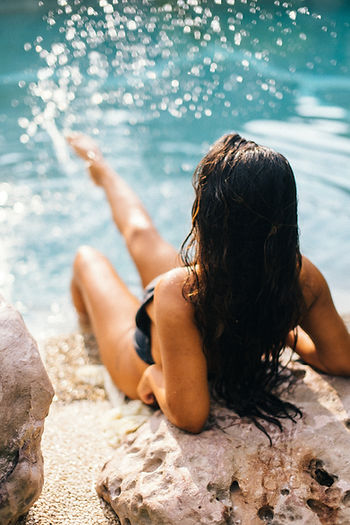
Summer in Southern California is not gentle on hair. The combination of heat, UV exposure, sweat, and humidity creates conditions that affect extension hair differently than natural hair — and if you are not adjusting your routine to account for the season, you may find your install aging faster than it should. The good news is that a few intentional adjustments to your hair extension care in summer make a significant difference in how long your extensions look and feel their best.
At Crimson & Clover Holistic Hair Lounge in Monrovia, CA, summer is one of the busiest seasons for extension consultations, and also one of the busiest for clients coming in with installs that have been compromised by summer conditions. This guide is everything I want every extension client to know before June turns into August.
What Makes Summer Hard on Hair Extensions. Hair extensions are a finished fiber — unlike your natural hair, they cannot self-repair, produce sebum for moisture, or regenerate after damage. This means they are more vulnerable to environmental stressors like UV radiation, heat, chlorine, salt water, and sweat than your natural hair. Summer concentrates all of these stressors simultaneously, which is why hair extension care in summer requires a more intentional approach than your regular year-round routine. |
Why Hair Extension Care in Summer Starts with UV Protection
UV radiation is one of the most underestimated threats to extension hair longevity. The same sun exposure that gradually lightens and dries out your natural hair does the same to extensions , and because extensions cannot regenerate moisture the way living hair can, the cumulative effect of UV exposure is more permanent. Extension hair that has been sun-exposed without protection tends to feel increasingly dry and coarse and may develop a subtle brassiness that affects the color match.
The solution is straightforward: a UV protectant spray applied to your hair before any significant sun exposure. These sprays form a barrier over the hair shaft that deflects UV radiation and helps the hair retain moisture. Apply it in the morning before heading outside, and reapply after swimming or sweating heavily. Look for a formula that is also protein-free like Davines SU Protective Hydrating Milk. Your extensions do not benefit from protein the way natural hair does, and a protein-heavy UV spray can cause the buildup and stiffness that shortens your install's lifespan.
If you are going to be outside for extended periods , at a festival, the beach, a long outdoor event , consider wearing your hair up in a loose braid or tucking it under a wide-brimmed hat. This is not about being precious with your hair. It is about protecting an investment that cost you real money and deserves real protection.
Managing Sweat and Scalp Health During Hair Extension Care in Summer
Sweat is an unavoidable part of summer, and for extension wearers it creates a specific challenge at the scalp level. Sweat and the natural oils it carries can build up more quickly near your bond or weft attachment points, creating an environment that can cause bead slip over time and in some cases contributes to scalp irritation. For clients with hand-tied extensions, this buildup at the bead rows is the primary concern.
The response is not to wash your hair more frequently — washing too often in summer strips the extensions of moisture and puts stress on the attachment points just as it does year-round. Instead, focus on targeted scalp care. A gentle scalp spray or toner applied between washes can help manage oil and sweat buildup at the roots without the full impact of a shampoo wash. When you do wash, use a sulfate-free, protein-free formula and be thorough but gentle around the attachment zone.
At Crimson & Clover, clients who exercise regularly or spend significant time outdoors in summer are advised to wash their hair more frequently to keep the attachment area clean and and free from sebum buildup. To prevent drying out your extensions apply a bit of conditioner on your ends before shampooing your scalp and rows. This provides a bit of extra protection. You can also apply hair oil to the ends before hopping in the shower.
The dry shampoo caution: Dry shampoo can feel like a summer lifesaver but apply it with care around your attachment points. Heavy dry shampoo application directly at the roots near your bonds or weft rows creates a buildup that is difficult to remove and can compromise attachment over time. If you use dry shampoo in summer, concentrate if just on your crown and hairline where the extensions aren't installed.
Heat Styling in Summer — Less Is More
If summer heat is already stressing your extension hair externally, adding heat styling on top of it compounds the dryness. Extension hair does not have the natural moisture replenishment system your natural hair does, so heat styling during summer months should be kept to a minimum. When you do style with heat, keep your tools at or below 350 degrees Fahrenheit and always use a heat protectant first.
The good news is that summer is the perfect season to embrace air-drying. At Crimson & Clover, clients with hand-tied extensions and butterfly wefts report that their hair air-dries beautifully in summer — the warmth of the season actually speeds up drying time and the natural texture of well-maintained extension hair often looks its best when it is allowed to dry freely. Loose waves, effortless texture, and volume without effort are some of the most appealing results of letting summer do the styling for you.
Product Adjustments for Summer
Your summer extension routine should be slightly lighter than your winter routine. Heavy creams and oils that help with winter dryness can become too heavy in summer heat, weighing the hair down and contributing to buildup at the scalp. Swap to lighter leave-in conditioners and detangling sprays during the warmer months. Avoid anything with heavy silicones that can trap heat against the hair shaft.
Moisture is still the priority — but lightweight moisture. A fine mist leave-in conditioner applied to the mid-lengths and ends after washing and before air-drying is often the only product most extension clients need in summer. Simple, light, and effective.
Sleeping in Summer with Extensions
Never go to bed with wet or even damp extensions — and in summer this takes on added importance because warm, humid overnight conditions combined with damp extensions create exactly the kind of environment that leads to matting and in serious cases mold buildup between weft layers. Always dry your extensions completely before sleeping, even if it means drying them earlier in the evening than you otherwise would.
A silk or satin pillowcase remains non-negotiable year-round but especially in summer when you may move around more during sleep due to warmth. If you find yourself sleeping hot, a loose braid before bed keeps the extension hair contained and reduces overnight friction on the attachment points.
Your Summer Extension Care Checklist at Crimson & Clover
Apply a UV protectant spray before outdoor exposure. Use lightweight, protein-free, sulfate-free products. Manage scalp buildup between washes with a gentle scalp spray. Minimize heat styling and embrace air-drying. Never sleep with damp hair. Sleep on a silk or satin pillowcase. Come in for your express move-up on schedule , summer conditions can accelerate the natural grow-out process.
If you are wearing hand-tied extensions, i-tips, k-tips, or butterfly wefts from Crimson & Clover and you have questions about your specific summer routine, Lauren is always available by text. Your install is an investment — and summer is not the time to let it slide.
Frequently Asked Questions
Does summer heat damage hair extensions?
Summer heat combined with UV exposure, sweat, and humidity can accelerate dryness and weaken attachment points if extensions are not properly maintained. At Crimson and Clover in Monrovia, CA, Lauren Constance advises clients to adjust their routine for summer with UV protection, lighter products, and careful scalp maintenance.
How often should I wash my extensions in summer?
Two to three times per week remains the ideal frequency even in summer. More frequent washing strips moisture and stresses attachment points. Use a gentle scalp spray between washes to manage sweat and oil buildup.
Can I wear my hair extensions in summer heat at Crimson and Clover?
Absolutely. Hand-tied extensions, i-tips, k-tips, and butterfly wefts at Crimson and Clover are installed with long-term hair health in mind and are well-suited for year-round wear including summer. A few seasonal adjustments to your home care routine keep your install looking and feeling its best throughout the warmer months.
Ready to enjoy your extensions all summer long without the stress? Start with a consultation at Crimson & Clover. |


Comments